
Dental Checkups & Cleanings – Gahanna, OH
Make Your Smile Clean & Healthy
Oral health can turn for the worse rather quickly, all things considered. After all, it doesn’t take long for a minor dental issue to become a major problem – cavities, gum disease, etc. Still, you can’t keep your smile healthy with brushing and flossing alone. You’ll need to include twice-yearly dental checkups and cleanings as well! Luckily, we at Claybrook Dental of Gahanna offer these amazing services. To learn more about them, just keep reading or book a visit to our office.
Why Are Regular Dental Checkups & Cleanings Important?
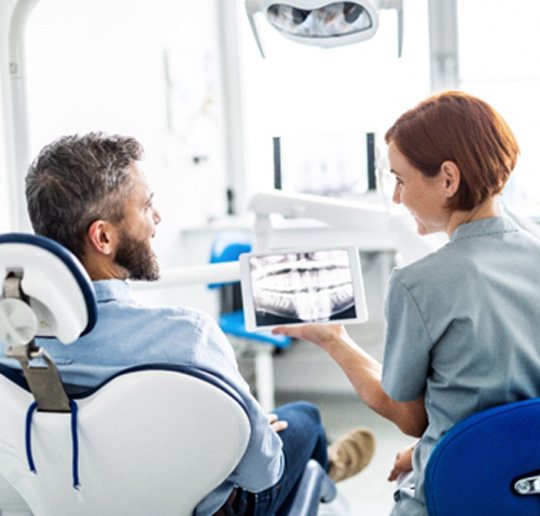
While it might sound tempting, you shouldn’t skip routine dental visits. Doing so only makes things difficult in the future.
For starters, these appointments prevent oral health conditions. You might attend one, for instance, to remove plaque that’d otherwise cause a cavity. Visits could also detect and treat decay before a tooth needs a crown. As such, checkups and cleanings help you avoid pain and annoyance. That’s better than facing a dental emergency, right?
At the same time, twice-yearly dental visits save you time and money. That’s only natural – they don’t take long, and most dental plans cover them. In contrast, root canal therapy and tooth extractions are time-consuming and expensive.
What to Expect During a Dental Checkup
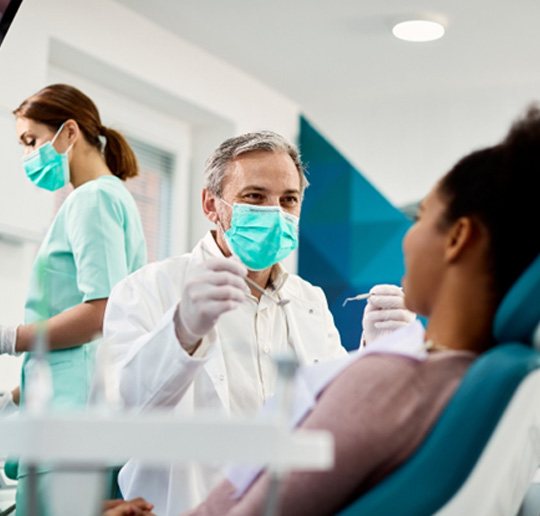
Different patients do, admittedly, have different oral situations. Even so, most dental checkups follow the same steps. You can thus expect certain things to happen at any given one. Some of these include:
- Health History Update(s) – Before the visit starts, the dentist will ask about any changes in your medical history and medications. Doing so allows them to tailor your care.
- An Oral Exam – Our office will perform an oral exam following the updates. In other words, we’ll assess your teeth, bite, and existing dental work. This process will also screen your mouth for oral cancer signs.
- X-Rays – To see if you have problems beneath your smile’s surface, we might take some dental X-rays.
- A Treatment Plan – If we spot any problems, our office will draft a treatment plan. We’ll take special care to lay it out for you step-by-step.
- A Q&A – After the treatment plan is outlined, the dentist will answer your remaining questions about treatment or home oral care.
What to Expect During a Dental Cleaning
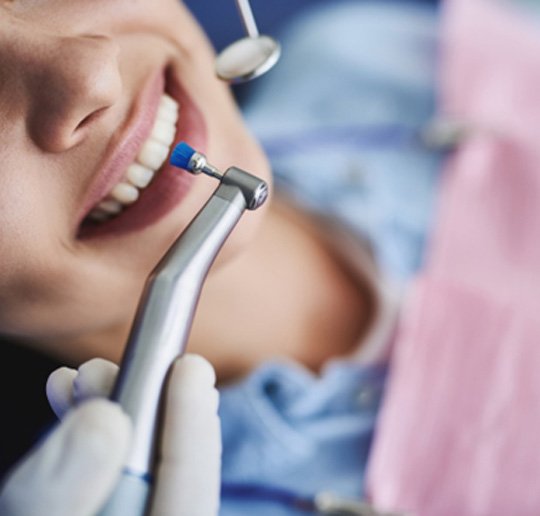
Ultimately, you can’t clean your whole mouth on your own. There will always be places your toothbrush and floss can’t reach. Therefore, a dentist usually follows a dental checkup with a professional cleaning. This latter service tends to involve:
- General Cleaning – For the cleaning itself, a dental hygienist uses special tools to remove plaque and tartar buildup from your teeth and gums. This practice is excellent for oral health, reducing your risk of tooth decay, gum disease, and chronic bad breath.
- Flossing– Our staff will also floss between your teeth to ensure harmful bacteria stay out of your mouth.
- Fluoride Treatment – Once the cleaning is over, the hygienist may apply fluoride to your pearly whites. That way, your smile will stay safe from cavities.
- Polishing– Lastly, the cleaning session will end with us polishing your pearly whites. This step eliminates any minor tooth stains you have.
Checkups & Cleanings FAQs
How long does a dental exam take?
The length of your dental exam depends on a couple of different factors, like if you have existing dental work, a history of oral health problems, or any concerns that you want your dentist to address. Usually, a checkup is pretty quick, taking about 10 to 15 minutes, but every patient is different. During your exam, your dentist may complete an oral cancer screening as well as examine your teeth, gums, tongue, restorations, oral appliances, and bite.
How often do I need to get dental X-rays?
There are a few different types of dental X-rays, each required at different times. For example, bitewing X-rays are usually completed once a year to check for cavities. Periapical X-rays are need-based and typically recommended before treatments. Finally, panoramic X-rays are taken every three to five years to help evaluate developmental concerns, such as how your wisdom teeth are doing, bite problems, and more.
The type of X-ray you will need will depend on when you last received X-rays and if you need to undergo any treatments. Or, if you bring up concerns with your dentists in Gahanna, they may recommend X-rays to better evaluate your symptoms. Other factors that can influence your need for this service include your age, health history, and existing medical conditions.
What’s the difference between a regular cleaning and a deep cleaning?
Regular dental cleanings are usually pretty simple, quick, and completed within 15 to 30 minutes, depending on how much plaque build-up you have. Deep cleanings are usually recommended for patients who are showing signs of gum disease.
Unlike regular cleanings, deep cleanings contain two main steps: scaling and root planing. Scaling involves thoroughly removing all plaque and tartar accumulation as far as the pockets of the gums. Then, root planing will occur, which involves removing hardened bacteria deposits on the roots of the teeth. Due to the intensity and thorough nature of deep cleanings, patients usually are numbed beforehand for their comfort.
There’s also an in-between, called “debridement cleanings.” These are usually recommended for patients with more plaque and tartar accumulation, but they’re usually not as invasive as deep cleanings that involve scaling and root planing.
Why do dentists usually recommend fluoride after dental cleanings?
Chances are, if you go in for a routine cleaning, your dentist or hygienist will offer you fluoride afterward. This process only takes a second, but it’s recommended to help prevent cavities from developing until the next time you come in. While not typically covered by dental insurance for adults, it’s typically covered for children! In any case, we always encourage our patients to seriously consider getting it, as it strengthens enamel and protects against decay. After all, it’s much less costly than a dental filling would be!